
Sports Betting on Mobile: How Wagering Alerts, SMS Lottery Updates, and Bet Predictions Help You Place Smarter Bets
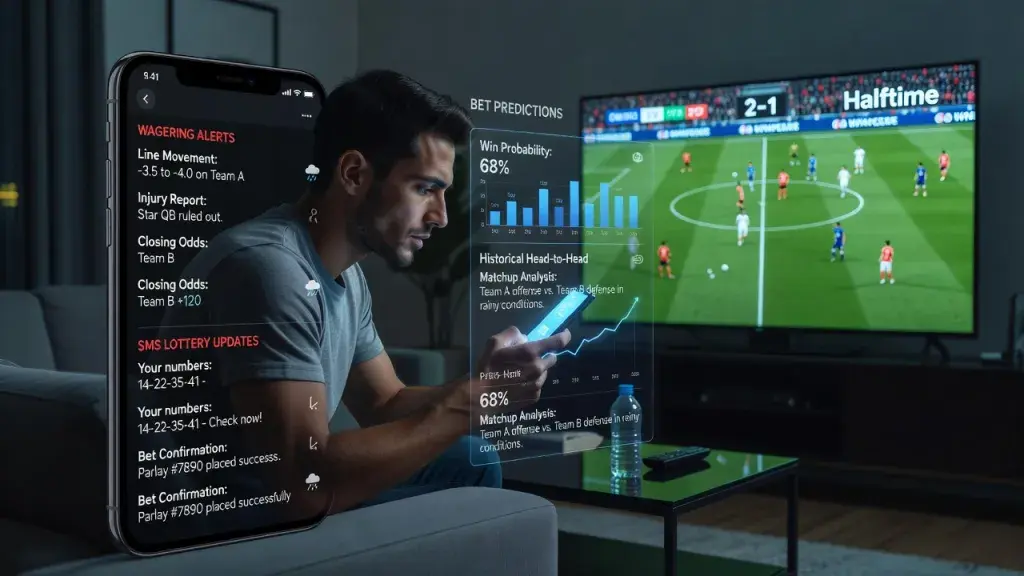
Authored by dongtam.info, 16-08-2026
A bettor checking a phone during halftime now has more actionable information than a professional oddsmaker had access to fifteen years ago. That shift didn't happen because people got smarter about sports overnight. It happened because the tools got faster, more personal, and more precise. Mobile betting compressed a process that once required a trip to a sportsbook counter into a few taps between innings or quarters.
What's less obvious is how much of that speed advantage comes from the quiet infrastructure running underneath the apps themselves. Wagering alerts flag line movements before the public catches on. Text-based notifications - the same lineage of technology that powers SMS lottery results - deliver time-sensitive information without requiring an app to be open. If you've never tried placing a wager through a text message, the mechanics behind sms betting are simpler than most people expect, and they solve a real problem: acting on information the instant it matters, not five minutes later when you finally unlock your phone. Bet predictions, meanwhile, have moved from barroom guesswork to data-informed modeling that ordinary bettors can access for free or cheap.
None of this guarantees winning. But it does change the quality of decisions being made - and that's worth examining closely.
The Shift From Sportsbook Counters to Smartphone Screens
Sports betting didn't become mobile by accident. It became mobile because the industry recognized that friction kills volume. A bettor who has to drive somewhere, wait in line, and fill out a slip by hand places far fewer bets than one who can act on an instinct during a commercial break. Mobile betting removed nearly every barrier between impulse and action, which is both its greatest strength and its most legitimate criticism.
From Paper Slips to Push Notifications
Traditional betting required physical presence. You picked a game, wrote it down, and waited. The modern version compresses that entire sequence into seconds. A push notification about a lineup change can prompt a bet placement before the notification even finishes displaying on the lock screen.
Why Speed Changed the Nature of Wagering
Speed didn't just make betting more convenient - it made it more reactive. Live betting, in-game adjustments, and rapid line shifts only make sense in an environment where placing a wager takes ten seconds instead of ten minutes. Mobile betting turned sports wagering from a pre-game ritual into a continuous activity that runs alongside the game itself.
The Regulatory Backdrop Behind Mobile Growth
Legal sports betting expanded state by state and country by country over the past decade, and mobile platforms grew in step with that expansion. Operators built apps first for regions where mobile wagering was explicitly permitted, which shaped the entire user experience around phones rather than desktops.
Understanding Wagering Alerts and Why They Matter
Wagering alerts are the nervous system of modern sports betting. They notify a user when something relevant happens - a line moves, an injury report drops, weather conditions shift, or a favored bet type reaches better odds. Without alerts, a bettor is relying on manual checking, which almost always means missing the best version of a line.
Types of Alerts Bettors Actually Use
- Line movement alerts, triggered when odds shift beyond a set threshold
- Injury and roster news alerts tied to specific teams or players
- Closing line alerts that notify users before betting windows close
- Personalized alerts based on past betting patterns or followed markets
How Alerts Reduce Reaction Time
The value of an alert is almost entirely about timing. A line that looks average at 10 a.m. might become excellent at 2 p.m. once new information circulates. Bettors who rely on alerts instead of manual checking catch these windows more consistently, because the notification does the watching for them.
The Risk of Alert Fatigue
Too many alerts create the opposite problem: notification blindness. When every minor odds tick triggers a buzz on the phone, users start ignoring all of them, including the ones that matter. Smart bettors curate their alert settings around specific markets rather than accepting every default notification an app offers.
SMS Lottery Updates and What They Reveal About Instant Communication
SMS lottery services predate modern sports betting apps by decades, but the underlying logic is identical: deliver time-sensitive results directly to a phone without requiring an app, a login, or a data connection. That reliability is exactly why sportsbooks borrowed the same technology for betting confirmations and alerts.
Why SMS Still Works When Apps Fail
Apps crash, update poorly, or drain battery life running in the background. Text messages don't have those problems. An SMS lottery update arrives whether or not the recipient's phone has a strong signal, a charged battery beyond minimal power, or the latest app version installed. That dependability is a large part of why sportsbooks kept the format alive for critical notifications.
Parallels Between Lottery Texts and Betting Notifications
Both systems solve the same core problem - getting a result or update to someone the moment it exists. A lottery draw result and a settled bet confirmation serve the same functional purpose: closing the loop on uncertainty as fast as technically possible.
Privacy and Trust Considerations With Text-Based Services
Phone numbers are more permanent and more personal than app logins, which means users are right to be selective about which services they authorize for SMS communication. Reputable operators make opt-out simple and limit message frequency, a standard worth expecting from any provider handling financial notifications.
How Bet Predictions Are Generated and Whether They're Reliable
Bet predictions used to mean a friend's confident guess. Now they typically come from statistical models that weigh historical performance, current form, matchup data, and situational factors like travel schedules or weather. The output isn't a guarantee - it's a probability estimate dressed up as a recommendation.
Data-Driven Models vs. Expert Opinion
Algorithmic predictions process far more variables than a human analyst reasonably could in the same timeframe. But human analysts catch context - a coaching change, locker room tension, a player's personal circumstances - that pure statistical models often miss entirely. The strongest prediction sources tend to blend both approaches rather than relying on one exclusively.
Reading Prediction Confidence Levels Correctly
A prediction claiming 65% confidence is not a promise. It means that, across many similar situations, the predicted outcome happened roughly two-thirds of the time. Bettors who treat any prediction as certain misunderstand the entire premise of probability-based forecasting.
Common Mistakes When Using Prediction Tools
- Treating a single prediction as a standalone reason to bet, without cross-checking odds value
- Ignoring sample size and trusting predictions built on limited historical data
- Following predictions blindly after a losing streak instead of reassessing the source's track record
Building a Smarter Mobile Betting Routine
Tools only help when they're organized into a routine rather than used sporadically. A bettor who checks alerts randomly, reads predictions inconsistently, and places wagers on impulse gets none of the structural benefit these tools are designed to provide.
Setting Alert Thresholds That Match Your Strategy
Alerts should reflect the markets a bettor actually follows. Someone focused on totals in basketball gains little from injury alerts in a sport they never bet. Precision in alert setup prevents the notification fatigue mentioned earlier while keeping relevant information front and center.
Cross-Referencing Predictions Before Committing
No single prediction source should dictate a wager on its own. Comparing two or three independent prediction models, then checking that consensus against the current line, produces far more disciplined decisions than following one algorithm's output in isolation.
Bankroll Discipline in a Fast-Moving Mobile Environment
The same speed that makes mobile betting convenient also makes overspending easier. Setting fixed stake limits before opening the app - and sticking to them regardless of what an alert or prediction suggests - remains the single most reliable safeguard against emotional betting.
Frequently Asked Questions
Are wagering alerts free with most mobile betting apps?
Most sportsbook apps include basic wagering alerts at no additional cost, since they encourage engagement and repeat betting. Advanced or highly customized alert systems, such as those tied to proprietary prediction models, sometimes require a subscription or premium account tier.
Can I place a bet directly through a text message?
Some operators support text-based wagering for verified accounts, allowing users to confirm or place specific bets by replying to an SMS prompt. This works similarly to SMS lottery systems, relying on pre-registered account details rather than requiring a full app session.
How accurate are bet predictions compared to just following the odds?
Odds already reflect a market's collective judgment, so predictions add value mainly when they identify discrepancies between a model's assessment and the current line. A prediction that simply confirms the obvious favorite offers little practical edge.
Do SMS lottery and betting notifications cost extra through my carrier?
Standard text messaging rates from your mobile carrier usually apply, though the service itself is typically free from the operator's side. It's worth checking your carrier plan if you're on a limited messaging allowance, since high-frequency alerts can add up.
What's the biggest mistake new mobile bettors make with alerts and predictions?
The most common error is reacting to every alert and prediction as if each one demands immediate action. Selective attention, built around a defined strategy, produces better outcomes than treating every notification as an urgent signal.
Is mobile betting inherently riskier than betting in person?
The risk isn't inherent to the technology - it's about access speed. Mobile betting removes the natural pauses that in-person betting builds in, which means self-imposed limits on time and stakes matter more, not less, once betting moves to a phone.